Carfax vs AutoCheck: Which Vehicle History Report Helps Used Car Buyers?
Posted Thursday, May 07, 2026
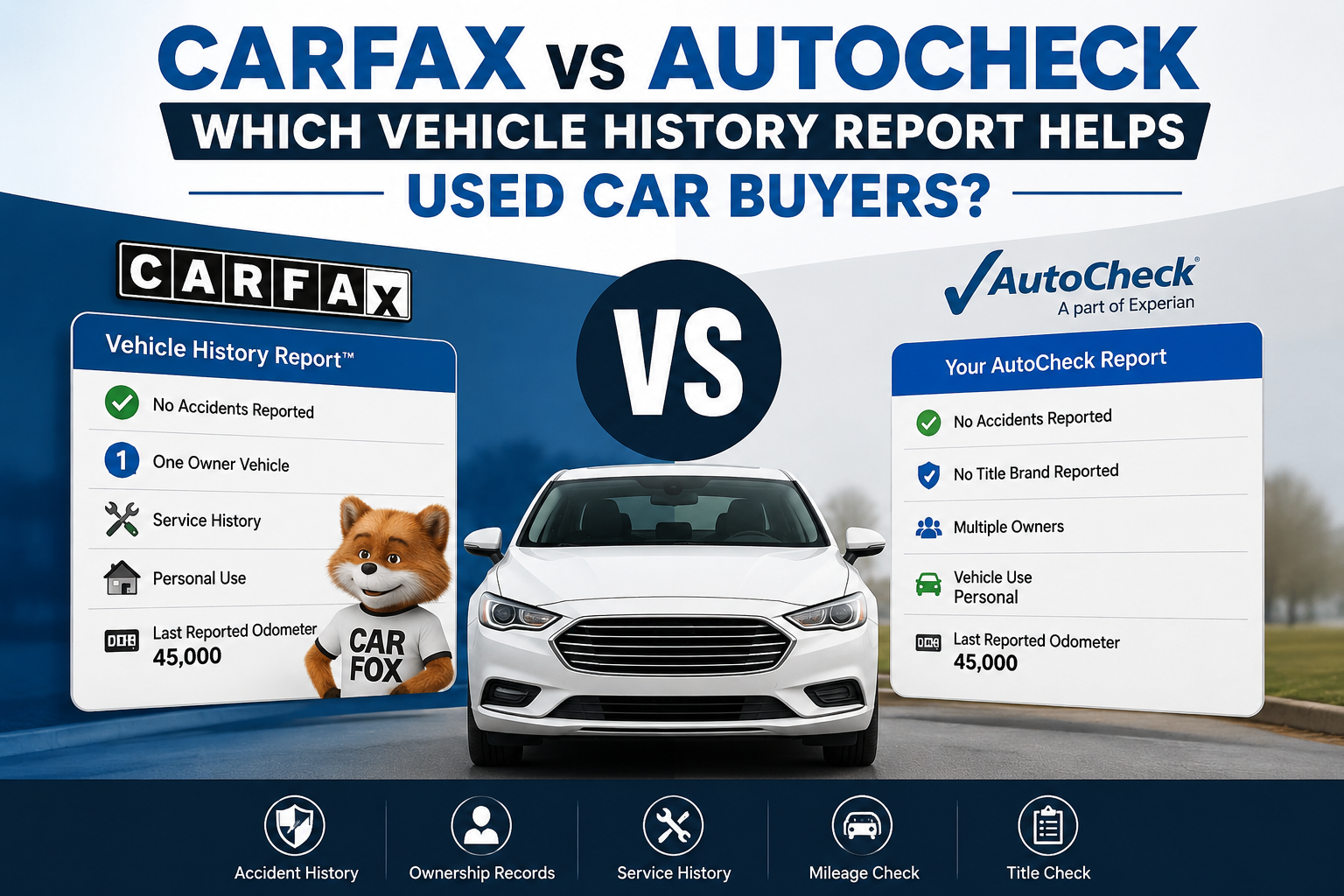
Choosing the right vehicle history report, such as a free Carfax report or AutoCheck, is a critical step when buying a used car. Carfax and AutoCheck both claim to reveal a vehicle's past — from accident history and title information to mileage and service records — but which report gives you the confidence to make an informed decision? This guide compares Carfax vs AutoCheck so car buyers can understand vehicle history, AutoCheck and Carfax reports, and what to look for when shopping for a used vehicle.
What is the difference between a Carfax report and an AutoCheck report?
Carfax report and AutoCheck report both provide vehicle history information, but they differ in data sources and presentation. Carfax pulls records from departments of motor vehicles, service and maintenance records, police reports, and dealerships to provide detailed information like accident history, odometer readings, and open recall notices. AutoCheck aggregates auction data and other sources, often giving an AutoCheck score that summarizes a vehicle's history on a scale of 1 to 100.
For buying a used car, understanding the distinction between Carfax and AutoCheck is important. Carfax often emphasizes detailed service records and ownership history, while AutoCheck may include more comprehensive auction and title data. Many car buyers choose to view both Carfax and AutoCheck reports to get multiple perspectives and spot red flags like salvage titles or rollback mileage.
How reliable is the vehicle history information from Carfax and AutoCheck?
Both Carfax and AutoCheck rely on third-party data, which means the vehicle's history is only as complete as available reports. Carfax might show maintenance records, police reports, and title information from various jurisdictions, while AutoCheck can capture auction history and title brands that matter to dealers and buyers. Neither report guarantees 100% coverage, so a single report might miss incidents not reported to data sources.
To make an informed decision, look for multiple indicators: consistent odometer readings, service and maintenance records, and ownership history across reports. Using both Carfax and AutoCheck and combining that information with a pre-purchase inspection can reduce surprises and uncover potential issues like salvage, rollback, or undisclosed flood damage.
Should I use Carfax or AutoCheck to check accident history?
Accident history is a key reason car shoppers purchase a vehicle history report. Carfax often lists police reports, insurance records, and service entries that indicate repairs after an accident. AutoCheck may report similar incidents and sometimes captures auction and title-brand information faster, which can highlight salvage or severe damage.
When buying a used vehicle, compare the accident history on both reports. Look for consistent entries and details such as dates, severity, and repairs. If one report shows an accident and the other doesn't, investigate further with the VIN and request maintenance records or a vehicle inspection to verify the car's past.
How important is the AutoCheck score compared to a Carfax report?
The AutoCheck score gives a quick, numerical snapshot of a vehicle's history, which can be useful for comparing similar cars in the context of car buying. The score ranges typically on a scale of 1 to 100 and evaluates factors like title brands, accident history, and auction frequency. This single metric helps buyers quickly screen multiple listings when shopping for a used vehicle.
However, a Carfax report provides detailed narratives and documentation like service history, ownership changes, and odometer readings. Many car buyers use the AutoCheck score for a fast comparison, then dive into a Carfax report, or both Carfax and AutoCheck reports for detailed information before making a decision.
Can Carfax or AutoCheck detect odometer rollback or mileage discrepancies?
Odometer rollback is a major concern for used car buyers. Both Carfax and AutoCheck track mileage entries from service records, inspections, and title transfers to flag potential rollback. If reported mileages are inconsistent — for example, a lower mileage on a later record — the report might highlight a discrepancy or suspicious odometer readings.
Still, not all mileage discrepancies are detected because it depends on available data. To protect yourself, compare mileage across multiple records, request maintenance and service history, and have your mechanic verify wear consistent with the reported mileage. Combining AutoCheck and CarFax insights with a physical inspection reduces risk.
Do Carfax and AutoCheck include salvage or title information?
Yes, both Carfax and AutoCheck report title brands such as salvage, rebuilt, flood, or junk titles when data is available from title agencies and auctions. AutoCheck often captures auction title brands quickly, while Carfax collects title information from DMV records and other sources. Title history is essential for avoiding vehicles with major prior damage.
When a vehicle shows a salvage or rebuilt title on either report, treat it as a red flag. Ask the seller for documentation, and consider a professional inspection and VIN check, as well as obtaining a VHR for a thorough understanding. Dealerships and used car dealers sometimes disclose title brands, but independent verification via a Carfax report and an AutoCheck report, or by comparing AutoCheck vs Carfax, helps make an informed decision.
How do Carfax and AutoCheck handle service history and maintenance records?
Carfax is known for detailed service and maintenance records, pulling entries from dealerships and service centers to show oil changes, repairs, and other maintenance events. These service and maintenance records help buyers verify a vehicle's care history and predict future reliability. AutoCheck also includes service entries, but may vary depending on data partnerships, making it important to consider AutoCheck vs Carfax for comprehensive insights.
When reviewing reports, look for consistent service history that matches ownership periods. A well-documented car's history suggests better upkeep. If service records are sparse on both reports, ask the seller about maintenance receipts or verify with the dealership to confirm the vehicle's service history, which is crucial for car-buying decisions.
Should I purchase a single report or get multiple vehicle history reports?
Buying multiple reports — Carfax and AutoCheck — is a common strategy among car buyers and dealerships. Each report draws from different data sources, so combining Carfax and AutoCheck reports increases the chance of uncovering hidden issues like accident history, salvage titles, or auction activity. Many used car dealers recommend multiple reports before finalizing a purchase.
Consider ordering a single report as a quick check, but follow up with the other report if anything looks questionable. Use the vehicle identification number (VIN) to pull all relevant histories, including a free Carfax report, and compare findings. Multiple reports plus a pre-purchase inspection provide the strongest protection when shopping for a used car.
How can buyers use VIN and auction data to get a complete vehicle history?
The vehicle identification number (VIN) is the key to unlocking a vehicle's past. Both Carfax and AutoCheck provide VIN-based searches that reveal title history, accident records, and auction appearances. AutoCheck often highlights auction history, which is valuable because many salvage or problematic vehicles pass through auto auctions.
Use the VIN to cross-check service records, ownership history, and auction data. If a vehicle shows multiple auction entries, investigate reasons — frequent auction appearances can indicate recurring problems. Use Carfax and AutoCheck, and ask for documentation from dealerships or previous owners if anything looks suspicious.
When should I still get a pre-purchase inspection despite vehicle history reports?
Even with comprehensive Carfax and AutoCheck reports, a pre-purchase inspection is essential. Reports may miss unreported accidents, incomplete maintenance entries, or mechanical issues not captured in databases. A qualified mechanic can uncover structural damage, hidden repairs, or components that don't match the vehicle's service history.
Combine the vehicle history report findings with a physical inspection and a test drive. Verify items such as odometer readings, service history, and any flagged accident or salvage entries. Dealerships and used car dealers often offer inspections; independent checks add an extra layer of protection for buyers.
How should I use Carfax and AutoCheck for negotiation and buying decisions?
Vehicle history reports are powerful negotiation tools. If Carfax or AutoCheck shows accident history, title brands, or inconsistent mileage, use that information to request price reductions, repairs, or walk away from risky deals. A clean carfax report or a high AutoCheck score can also justify a higher offer, but always confirm with inspection results.
When dealing with dealerships or private sellers, present documented concerns from the Carfax and AutoCheck reports and ask for clarification. Used car buyers who leverage both reports, such as AutoCheck or Carfax, and inspection results make more informed decisions and are less likely to encounter unexpected repair costs after purchase.
Conclusion
Carfax vs AutoCheck isn't an either-or decision for many used car buyers. Carfax report offers detailed service history and DMV-sourced title data, while the AutoCheck report provides auction insights and a comparative AutoCheck score. Using both Carfax and AutoCheck reports, checking the VIN, and ordering a pre-purchase inspection gives buyers the best chance to spot red flags like salvage, odometer rollback, or undisclosed accidents.
Carfax vs AutoCheck: Which Vehicle History Report Is Better for Used Car Buyers? The best approach is to use both when possible, compare the vehicle's history information, and follow up with a professional inspection. If you're shopping for used cars for sale in the Woodbridge area, contact Woodbridge Auto Sales, a Used Car Dealership in Woodbridge, VA. Whether you're working with used car dealers or independent sellers, bring the car's VIN, request Carfax and AutoCheck, and get a thorough inspection to make an informed buying decision.