Certified Pre-Owned Vehicle vs Used Car: Choosing the Best Option
Posted Monday, Jun 08, 2026
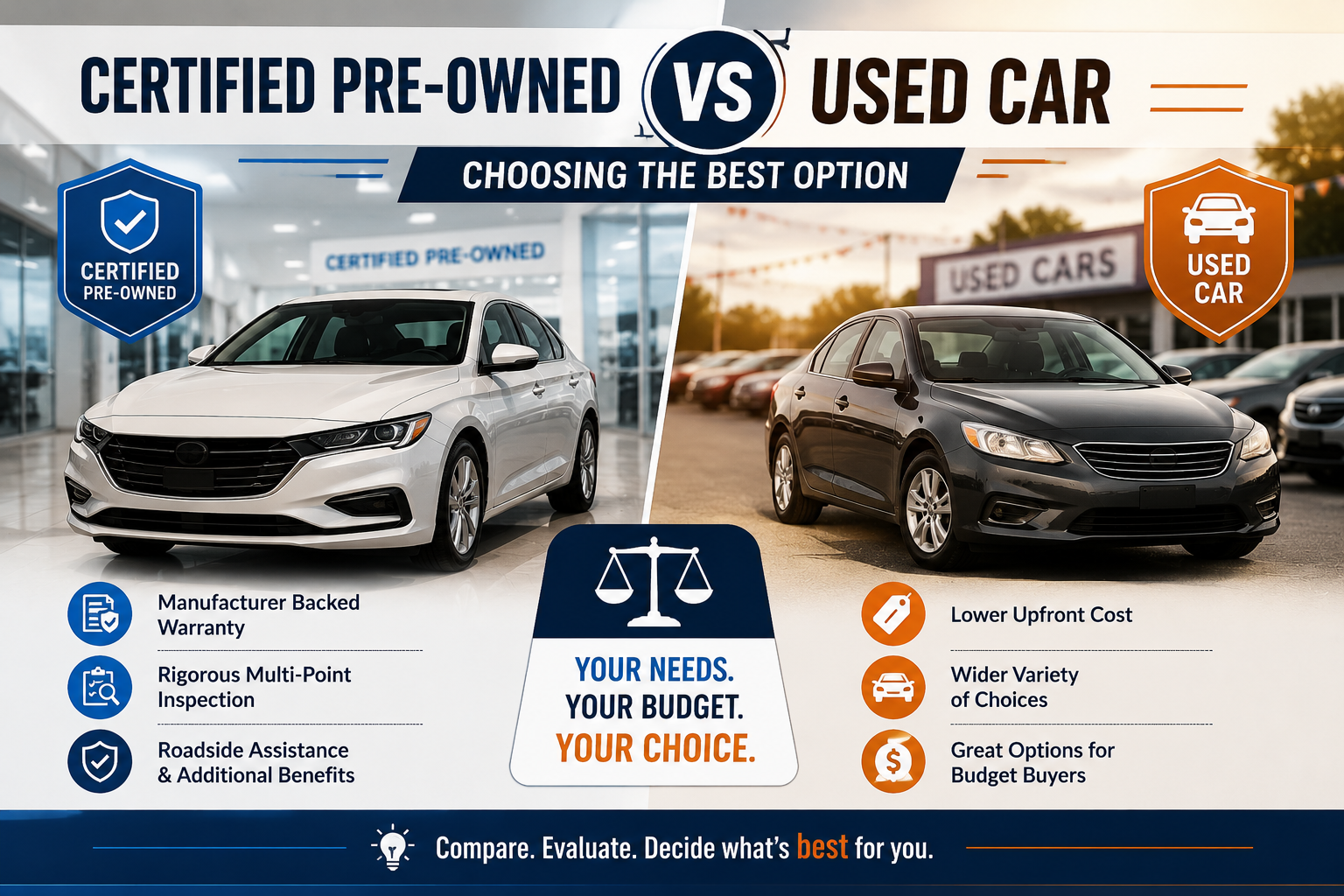
Deciding between a certified pre-owned vehicle and a standard used car is one of the most important choices for Virginia drivers shopping for reliability, value, and peace of mind. Whether you're buying a CPO car to get manufacturer-backed warranty coverage or opting for a non-certified used vehicle to save money, understanding the differences, inspection processes, and real-world costs will help you find the perfect vehicle at the right price.
What are the key differences between a certified pre-owned vehicle and a used vehicle?
The difference between certified pre-owned and non-certified used cars primarily comes down to inspection, certification requirements, and warranty coverage. Certified pre-owned vehicles must meet strict standards for age, mileage, and condition, and they undergo a multi-point inspection performed by trained technicians. A CPO vehicle typically includes extended warranties, roadside assistance, and sometimes bumper-to-bumper coverage backed by the automaker, which offers added peace of mind compared to a standard used car.
By contrast, standard used cars or non-cpo used cars are sold "as-is" more often, especially at private sales or independent used car dealers. Buying a traditional used vehicle can be more budget-friendly and offer lower upfront cost and depreciation, but you’ll likely need to invest in inspections, repairs, or an additional warranty if you want protection similar to a certified pre-owned car.
How rigorous is the inspection process for certified pre-owned vs used cars?
Certified pre-owned vehicles must pass a thorough inspection mandated by the automaker or the dealership’s cpo program. Typical certification requirements include a multi-point inspection covering mechanical components, safety systems, and cosmetic condition. The vehicle’s history, previous owner records, and mileage are reviewed to ensure the used vehicle meets standards for age and mileage before it earns the "certified" label.
For non-certified used cars, the inspection process depends on the buyer or the selling dealer. Independent shoppers often hire a mechanic to inspect a used car before purchase—this can reveal repair needs and potential future costs. If you’re buying a used vehicle from a dealership, ask whether they perform any inspection and get a copy of the report, or consider bringing the vehicle to a trusted mechanic yourself.
What warranty coverage can you expect with a CPO car versus a non-certified used car?
CPO warranty coverage is one of the key advantages of buying certified pre-owned. Certified pre-owned vehicles typically come with a limited warranty from the automaker that may include powertrain coverage, extended warranty coverage, and additional perks like roadside assistance. Some programs even offer near-new bumper-to-bumper-style protections for specific model years. This reduces the risk of costly repairs shortly after purchase and is a big selling point for used car buyers seeking stability.
Non-certified used cars rarely include manufacturer-backed warranties. Buyers can purchase extended warranties or additional warranty coverage from third parties, but those plans vary widely in terms, repairs covered and cost. When comparing used cars for sale, factor in the potential expense of repairs and the value of an extended warranty against the higher price of a certified pre-owned vehicle.
Are certified pre-owned vehicles backed by the automaker worth the extra cost?
Many shoppers find that buying certified pre-owned is worth the added expense because of the built-in assurances: certification requirements, multi-point inspections, and manufacturer-backed warranties reduce uncertainty. For Virginia drivers who prioritize lower risk, having a cpo warranty and roadside assistance can provide real peace of mind, especially for longer commutes or family vehicles like a Toyota Camry or popular Hyundai models.
However, if your budget is tight and you're comfortable managing repairs or securing an extended warranty independently, a comparable used vehicle can save money upfront. Consider the vehicle selection, model years available, mileage, and Kelley Blue Book values when deciding if paying a premium for a certified pre-owned vehicle delivers long-term savings.
How does depreciation affect the value of certified pre-owned vs used cars?
Depreciation is a major factor in vehicle purchase decisions. New cars depreciate the most in the first few years, which is why many buyers choose certified pre-owned or used cars to avoid steep early depreciation. CPO vehicles often strike a balance: they’re newer and have lower mileage than typical used cars, but most of the steepest depreciation has already occurred, so you get a newer model at a lower cost than buying new.
Standard used cars will generally be cheaper and have already depreciated more, which can be advantageous for budget-conscious shoppers. When comparing vehicles, use Kelley Blue Book and market research to evaluate depreciation trends for specific models—such as a Toyota Camry or Hyundai—and determine which option offers better long-term value.
What are the pros and cons of buying a certified pre-owned car vs buying a traditional used car?
Pros of buying certified pre-owned:
- Manufacturer-backed CPO warranty and roadside assistance
- Multi-point inspection and certification requirements
- Generally, lower immediate maintenance risk
Cons of buying certified pre-owned:
- Higher purchase price compared to non-certified used cars
- Certification restrictions on age and mileage limit selection
- Possible added expense for features you may not need
Pros of buying a traditional used vehicle:
- Lower purchase price and more options across model years and mileage
- Ability to negotiate steeper discounts at dealer lots or private sales
- Greater opportunity to find rare trims or older models
Cons of buying a traditional used vehicle:
- Higher risk of unexpected repairs and less warranty coverage
- Potential for hidden history or skipped maintenance
- May require a thorough mechanical inspection to ensure condition
How should Virginia drivers decide which is the better choice for their budget and needs?
Start by defining your priorities: affordability, low maintenance risk, or the newest model years. If peace of mind and warranty coverage are top priorities, then buying certified pre-owned is often the better choice. CPO vehicles are ideal for drivers who want the comfort of a rigorous inspection and manufacturer-backed support without the new car price tag.
If your main priority is cost savings, a non-certified used car can be a better fit. Shop around, compare prices on similar vehicles, check mileage and vehicle history, and use tools like Kelley Blue Book to estimate fair market value. Don’t forget to budget for inspection and possible repairs if you choose a standard used vehicle.
What role do dealerships and auto groups play in choosing certified pre-owned or used cars?
Dealerships and auto groups often run CPO programs in partnership with automakers; these certified pre-owned vehicles are inspected according to manufacturer standards and typically include a CPO warranty. Buying through a dealership can make the process smoother, with financing options, trade-in evaluations, and access to detailed service records. Large auto groups may offer a broad selection of certified pre-owned and non-certified used cars across multiple brands.
Independent used car dealers or smaller dealers lots might offer lower prices and more negotiation room, but may have less consistent inspection processes. When shopping dealership lots, ask about the certification process, inspection records, and warranty coverage. Reputable used car dealers will be transparent about vehicle history and any additional warranty or roadside assistance included with the purchase.
How can a shopper verify a certified pre-owned program and inspect a used vehicle properly?
To verify a certified pre-owned program, ask the dealer for documentation outlining certification requirements, the multi-point inspection checklist, and warranty terms. Confirm that the cpo warranty is backed by the automaker if that’s important to you, and review what repairs and services are covered. Check whether roadside assistance and transferability are included.
For any used vehicle, whether CPO or non-certified, consider hiring an independent mechanic to perform a pre-purchase inspection. Use a checklist: engine and transmission condition, brakes, suspension, frame damage, and previous owner maintenance records. A thorough mechanical inspection can save buyers from unexpected repair costs and is an essential step in buying a used car.
Which models or situations make buying certified pre-owned more attractive for Virginia drivers?
Buying certified pre-owned is especially attractive for popular, reliable models that hold value and have predictable repair histories—examples include the Toyota Camry, certain Hyundai models, and luxury makes like BMW, where repair costs can be high. A CPO program helps offset potentially expensive repairs with warranty coverage and inspection assurances.
Also consider your driving patterns: if you have long daily commutes or plan to keep the vehicle for several years, a certified pre-owned vehicle with a robust warranty and roadside assistance can save money over time and provide the peace of mind many used car buyers seek.
How can buyers save money while still getting the added benefits of a certified pre-owned vehicle?
To save money while getting CPO benefits, compare certified pre-owned inventory across multiple dealerships and auto groups to find the best deal on your chosen model year and mileage. Negotiate trade-in values and financing terms, and use Kelley Blue Book to benchmark fair pricing. Sometimes, a slightly higher mileage CPO vehicle can offer the same warranty coverage at a lower price.
Consider certified pre-owned vehicles that include extended warranty coverage as part of the package, or negotiate for additional warranty coverage. If the dealership offers roadside assistance or other perks, factor those into the total value. In some cases, buying a well-inspected non-certified used car and purchasing a reputable extended warranty can be the most budget-friendly path to similar protection.
Conclusion: Certified Pre-Owned vs Used Cars — What’s the Better Choice for Virginia Drivers?
Certified pre-owned cars and non-certified used vehicles each have clear advantages. A certified pre-owned vehicle offers inspection-backed reliability, manufacturer-backed CPO warranty coverage, and added benefits like roadside assistance—making it a strong choice for buyers seeking peace of mind and lower risk. Standard used cars offer lower upfront cost and a broader selection, appealing to budget-minded shoppers willing to manage potential repairs and inspections.
Ultimately, the better choice depends on your priorities: if warranty coverage, thorough inspection, and reduced uncertainty matter most, buying certified pre-owned is often the right move. If affordability and wide selection are your focus, a traditional used vehicle may fit your needs better. For Virginia drivers researching certified pre-owned vs used cars, use tools like Kelley Blue Book, request multi-point inspection reports, and consider mechanic inspections or extended warranties to protect your purchase.
If you’re ready to find the perfect vehicle in Northern Virginia, visit Woodbridge Auto Sales, a Used Car Dealership in Woodbridge, VA. Our team of used car dealers offers a wide selection of Used cars for sale, certified pre-owned options, and standard used vehicles—helping shoppers make informed choices between buying a CPO car and buying a traditional used vehicle. Whether you're looking for manufacturer-backed warranty coverage or an affordable used vehicle, we’re here to help you find the right vehicle that fits your needs.